
Trip guides / Getting around
Lisbon to Seville: The Best Ways to Travel
Lisbon and Seville are about 460km apart by road, and plenty of travellers pair Portugal’s capital with Andalusia on the same trip. There’s no direct train, so most people take the bus, fly or drive. Here’s how the options compare on time and cost, where to break the journey, and what to know at the border.
Quick answer: the direct bus is the simplest and usually the cheapest, about 6 to 7 hours from Sete Rios or Oriente to Seville’s Plaza de Armas bus station. Flying takes about an hour in the air with TAP or Ryanair. Driving takes about 4.5 to 5 hours through the Algarve. There’s no direct train, and Spain is one hour ahead of Portugal.
.jpg)
Your options at a glance
| Option | Time | Rough cost | Best for |
|---|---|---|---|
| Direct bus | About 6–7 hrs | From about €20, often €30–40 | Budget, centre to centre |
| Flight | About 1 hr flying, 3.5–4 hrs door to door | From about €20 on sale, often much more | Speed, if you book early |
| Train to Faro + bus | About 7–8 hrs with the change | About €24–26 train full fare, plus a bus from about €15 | A stop in the Algarve |
| Train via Badajoz | About 10–13 hrs | Roughly €35–70 for two tickets | Rail fans with time to spare |
| Car | About 4.5–5 hrs | Fuel, about €24 in tolls, plus any one-way fee | Stops on the way |
Prices checked October 2026. Times are actual travel time: the clock jumps forward an hour when you enter Spain.
By bus
Direct coaches run between Lisbon and Seville several times a day, including overnight. The main operators are ALSA, which works with Portugal’s Rede Expressos on international routes, and FlixBus. Buses leave from Sete Rios, next to the Jardim Zoológico metro stop, and from Oriente, and some ALSA services also pick up at Lisbon airport.
The trip usually takes about 6 to 7 hours of actual travel. Because Spain is an hour ahead, a bus leaving at 11am will show an arrival time of around 7pm. Most buses end at the Plaza de Armas bus station, about a 15-minute walk from the Cathedral, and some ALSA services also stop at Santa Justa train station.
- Book online: the cheapest fares go first, and summer weekends fill up.
- Night buses: a late departure saves a hotel night, but you’ll arrive in Seville around dawn.
- ID: carry your passport or ID card, as it can be checked when you board.
For stations and booking, see Portugal by bus.
By plane
A direct flight is the fastest way. TAP Air Portugal and Ryanair both fly from Lisbon to Seville’s San Pablo airport, with several flights a day between them. The flight takes about an hour.
With airport transfers and security, door to door is more like 3.5 to 4 hours. Sale fares can be very cheap, but usually hand luggage only. Ryanair flies from Lisbon’s Terminal 2, which has no metro, so take the free shuttle bus from Terminal 1. In Seville, the EA airport bus runs to the centre and Plaza de Armas in about 25 to 45 minutes, for about €6 single in 2026.
By train
There’s no direct train between Lisbon and Seville, and no railway crosses the border in the Algarve. You can still do most of the trip by rail, though it’s slower than the bus.
Train to Faro, then bus
Take an Alfa Pendular or Intercidades train from Oriente, Entrecampos or Sete Rios to Faro, about 3 to 3.5 hours. There are only around five long-distance trains a day, so check the timetable first. Faro’s bus station is a short walk from the train station, and direct buses to Seville take about 2.5 hours. This works well if you want a night in Faro or Tavira on the way. See Lisbon to the Algarve for the train details.
A slower option: take the regional train on to Vila Real de Santo António, the 15-minute ferry to Ayamonte, then a Damas bus to Seville, about 2.5 to 3 hours. There are only a few buses a day.
Train via Badajoz
Take a train from Lisbon to Entroncamento, then change to the regional train to Badajoz, just over the border. There are only two a day, both timed to connect with Intercidades trains from Lisbon. From Badajoz, a Renfe regional train runs to Seville via Mérida, which is known for its Roman theatre. You need separate CP and Renfe tickets, and the whole trip takes about 10 to 13 hours. It only makes sense if you love trains or want to stop in Mérida.
By car
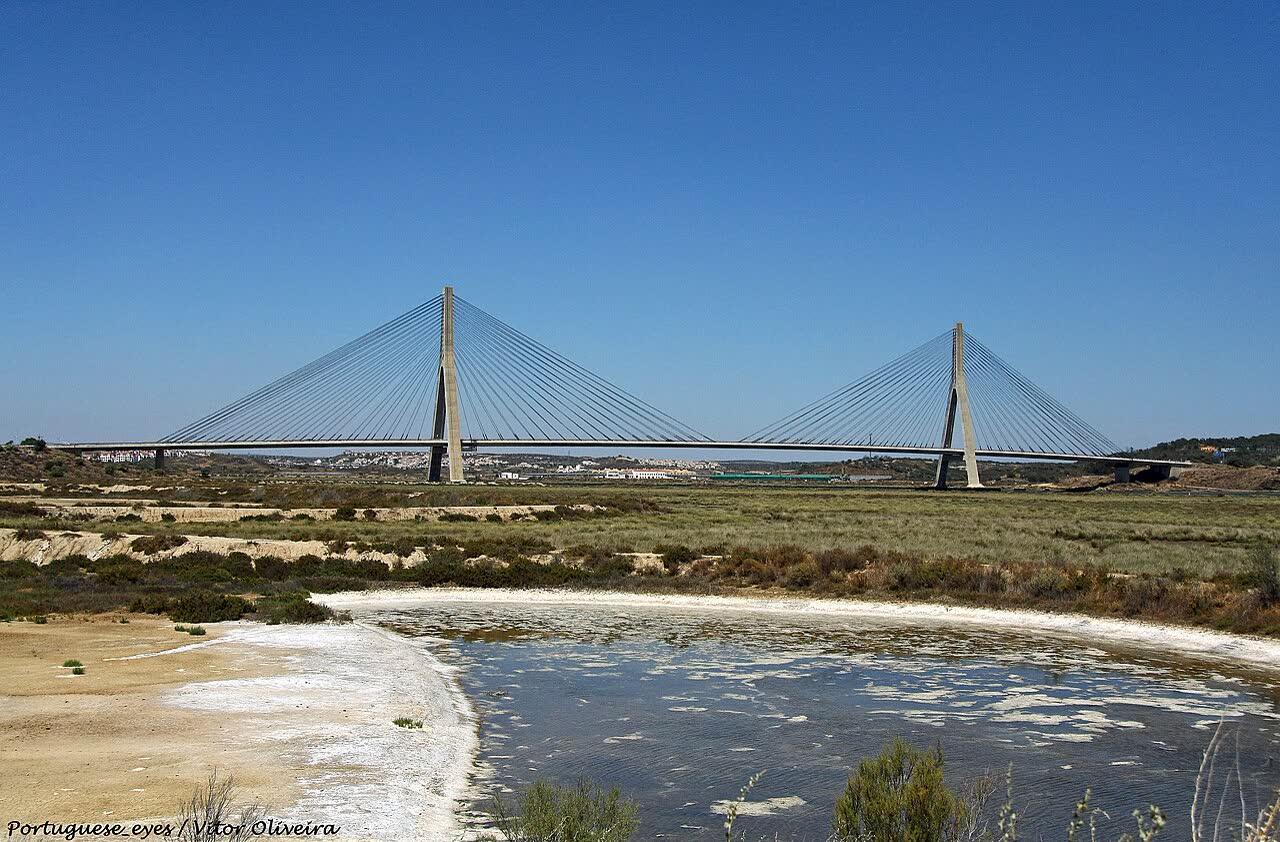
The quickest drive takes the A2 south from Lisbon to the Algarve, then the A22 east to the border at Castro Marim. You cross the Guadiana International Bridge into Spain at Ayamonte and follow the A-49 past Huelva to Seville. It’s about 460km, or 4.5 to 5 hours without stops.
- Tolls: the A2 has toll booths and costs about €24 for a car to the A22 junction (€23.80 in 2026). The A22 has been toll-free since 1 January 2025, the bridge is free, and the Spanish A-49 is free too. The Tagus bridges only charge traffic heading into Lisbon, so leaving the city is free. See Portugal tolls explained.
- Hire cars: tell the rental company you’re going to Spain, as most charge a cross-border fee. Dropping the car in Seville usually adds a one-way fee, which can run to hundreds of euros, so compare the total price. See our car rental guide.
- Parking in Seville: use a car park on the edge of the old centre and walk in.
Hiring a car for the trip? Compare prices and one-way fees on Discover Cars, and check the cross-border rules before you book.
Breaking the trip
A night on the way turns a long travel day into part of the holiday, by car or by train and bus.
- Tavira: a riverside town with a castle, old churches and island beaches, about half an hour from the border. See Tavira and the eastern Algarve.
- Faro: the Algarve’s capital, with a walled old town and boat trips into the Ria Formosa lagoon. See things to do in Faro.
- Vila Real de Santo António: the last Portuguese town before the river, with a neat 18th-century centre. See Vila Real de Santo António.
- Huelva: about an hour from Seville on the A-49. Nearby, the Muelle de las Carabelas at Palos de la Frontera has replicas of Columbus’s three ships that you can climb aboard.
Staying in the Algarve and only want a day in Seville? See our Seville day trip from the Algarve.
Crossing the border
- No routine checks: Portugal and Spain are both in the Schengen area, so there’s usually no passport control on the bridge or the bus.
- Carry ID anyway: bring your passport or national ID card, as police can make spot checks.
- Time zone: Spain is one hour ahead of Portugal all year. Check whether bus and flight times are in Portuguese or Spanish time.
- Visitors from outside the EU: days in Portugal and Spain count towards the same 90-day Schengen limit.
FAQ
Is there a direct train from Lisbon to Seville?
No. You can take the train to Faro and a bus from there, or go via Badajoz with two separate tickets, but the direct bus is faster and simpler.
How long is the bus from Lisbon to Seville?
About 6 to 7 hours of actual travel. Your arrival time looks an hour later because Spain is an hour ahead. Most buses arrive at Plaza de Armas bus station.
Is it better to fly or take the bus?
Flying is quicker, about 3.5 to 4 hours door to door, and can be cheap if you book early. The bus is simpler and goes from centre to centre.
Can I take a hire car from Lisbon to Seville?
Yes, with most companies, but you must tell them you’re crossing into Spain. Expect a cross-border fee, and a one-way fee if you drop the car in Seville.
More: Seville from the Algarve and Portugal vs Spain.
See also: Lisbon to the Algarve, Tavira and the eastern Algarve, Portugal by bus, Portugal car rental, Portugal tolls explained, Lisbon to Madrid and Lisbon Airport Terminal 2.
Some links in this guide are affiliate or referral links (GetYourGuide, Booking.com, Discover Cars, Welcome Pickups, Airalo, Yesim, Saily, Tiqets, Radical Storage, EKTA, AirHelp, Uber). If you book or sign up through them we may earn a small commission or ride credit at no extra cost to you. It helps keep our groups and this site free.
Still got questions?
Ask 305,000+ travellers and locals in our free Facebook groups.