
Trip guides / Planning
Dolphin Watching in Portugal: Algarve, Sado, Madeira and Azores
Portugal is one of the easiest places in Europe to see wild dolphins. Boat trips leave from almost every Algarve marina, a resident group lives in the Sado estuary an hour from Lisbon, and in Madeira and the Azores dolphins share deep water with whales. Here’s where to go, what it costs in 2026 and how to pick a responsible operator.
Quick answer: for dolphins and whales on one trip, go to the Azores (about €70–75). Madeira has dolphins all year, from about €40. Algarve trips from Lagos, Portimão, Albufeira and Vilamoura cost about €35–45. Near Lisbon, the Sado estuary at Setúbal has about 25 resident bottlenose dolphins. Sightings are never guaranteed, so choose a licensed operator that offers a retry.
,_S%C3%A3o_Miguel_Island,_Azores,_Portugal_(PPL1-Corrected).jpg)
The Algarve
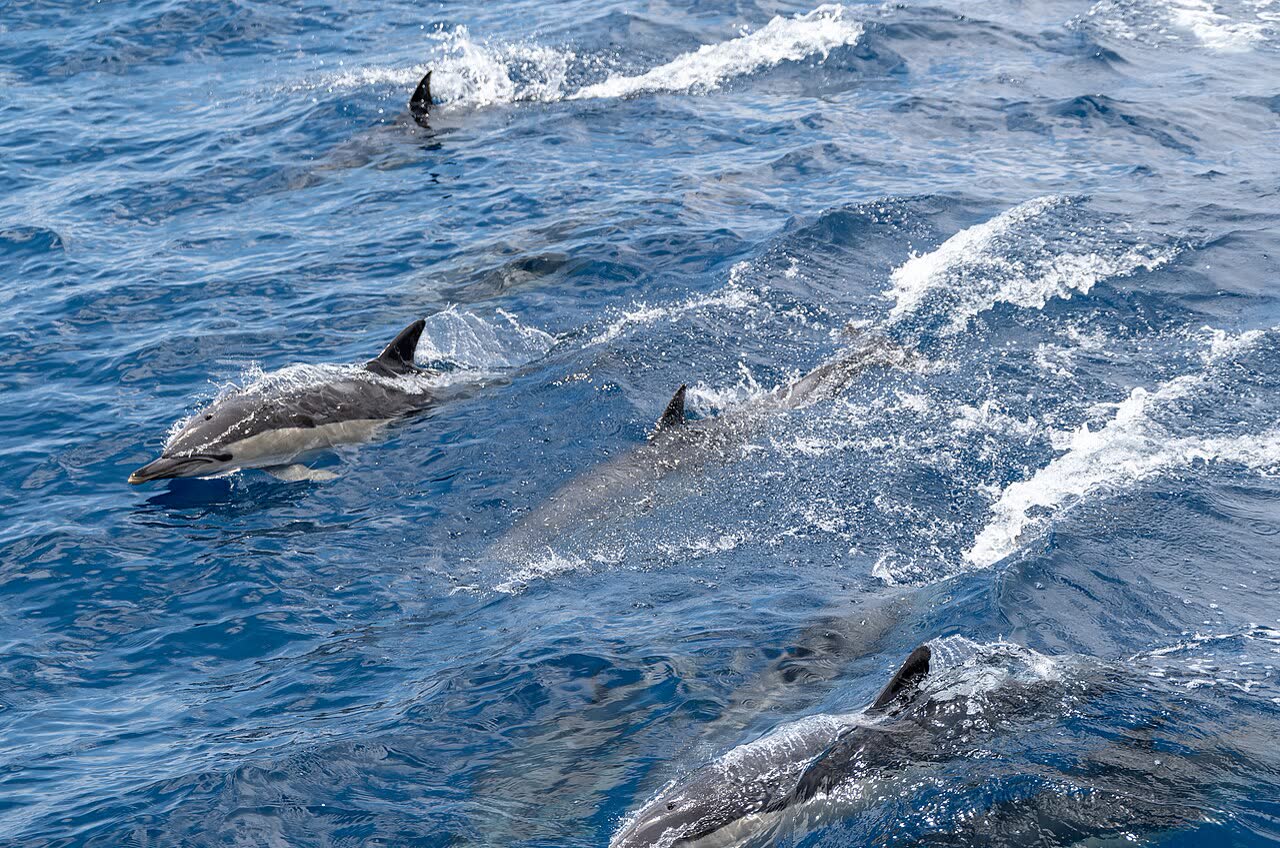
Trips leave from Lagos, Portimão, Albufeira, Vilamoura and Sagres. Common dolphins are the usual sighting, with bottlenose dolphins next; other species are much rarer.
- Trip length: about 1.5 to 2.5 hours, a few miles offshore.
- Prices: about €35 to €45 for adults in 2026, less for children. Albufeira and Vilamoura are often a little cheaper than Lagos and Portimão, and some trips add the sea caves.
- Sightings: operators say dolphins are seen on most trips, but few publish figures. Some give a free retry if you see none, so ask first.
- Season: most of the year in calm weather, best from May to October.
RIB or catamaran?
- RIBs (rigid inflatable speedboats) carry about 12 to 18 people and reach the dolphins fast. They bounce and you may get wet, so avoid them in pregnancy or with back problems.
- Catamarans are slower but steadier, with shade and usually a toilet. They suit young children and anyone prone to seasickness.
See the best Algarve boat trips and things to do in Lagos.
The Sado estuary and Setúbal
The Sado is home to Portugal’s only resident group of bottlenose dolphins, one of only a few in Europe. In autumn 2026 the nature authority, ICNF, presented three calves born between June and August, bringing the group to 25. Each dolphin is known by its dorsal fin and has a name.
- Trips: boats leave from Setúbal and from Tróia, usually twice a day, for about 2 to 3 hours. Adults pay about €40 and children about €17.50 to €20.
- Sightings: very likely but not guaranteed; operators usually rebook you free if you see none.
- The rules: as everywhere on the mainland, boats must stay at least 30 metres away, with no more than three within 100 metres and 30 minutes at most per boat. No chasing, splitting the group or cutting in front, and no swimming with them.
- August limits: in 2023, 2024 and 2025 the ICNF closed the estuary mouth to dolphin watching in August and banned it across the estuary from 1pm to 3pm. Check what applies when you book.
See Setúbal and Arrábida and the Tróia peninsula.
Book ahead: morning slots sell out in July and August. Compare dolphin trips from Lagos and Sado dolphin trips, and check the operator’s own website, which can be cheaper.
Madeira
Deep ocean starts just off Madeira’s coast, so boats reach dolphin water within minutes. Trips run all year from Funchal and Calheta. Bottlenose dolphins and short-finned pilot whales are among the regulars, and other species pass through during the year.
- Prices: from about €40 for a three-hour catamaran trip from Funchal to about €67 for a two-hour RIB from Calheta, less for children.
- Sightings: Lobosonda, a Calheta operator, reports cetaceans on about 89% of its traditional-boat trips and 95% of its RIB trips from 2012 to 2025.
- Funchal or Calheta? Funchal has more departures and bigger boats; Calheta is quieter, with a sandy beach. See Calheta and things to do in Funchal.
The Azores
The Azores are among the best places in Europe for whales and dolphins, with more than 20 species recorded. Common, bottlenose and Risso’s dolphins are seen all year, and Atlantic spotted dolphins arrive mainly in summer. Sperm whales live here year-round, and blue and fin whales pass in spring.
- Vigias: lookouts on the cliffs, a tradition from the whaling days, spot the animals and radio the boats. Futurismo, on São Miguel and Pico, quotes a 98% success rate and offers more trips until you see something.
- Trips: about three hours from Ponta Delgada (São Miguel), Lajes and Madalena (Pico) or Horta (Faial), for about €70 to €75 in 2026.
- Season: April to October is best: spring for big whales, summer for calm seas and dolphins.
Swimming with dolphins
In the Azores you can swim with wild dolphins, but only with a licensed operator. Swimmers use a snorkel (never scuba), only a couple go in at a time, touching and feeding are banned, and swimming with whales is not allowed. Trips cost about €115 to €160, often have minimum ages of 12 to 14, and depend on the dolphins’ behaviour. Some operators, including Futurismo and Espaço Talassa on Pico, have stopped offering swims on welfare grounds.
See whale watching in the Azores and Ponta Delgada.
Book early in your stay: rough seas cancel island trips. Compare Madeira dolphin trips and whale watching on São Miguel; operators’ own websites can be cheaper.
Which place is best?
| Place | Main species | Season | Adult price (2026) | Best for |
|---|---|---|---|---|
| Algarve | Common and bottlenose dolphins | Most of the year; best May to October | about €35–45 | Beach holidays; adding the sea caves |
| Sado estuary (Setúbal, Tróia) | Resident bottlenose dolphins | All year; check August limits | about €40 | A day trip from Lisbon |
| Madeira (Funchal, Calheta) | Bottlenose dolphins, pilot whales and visitors | All year | about €40–70 | Winter sun; a short ride to deep water |
| Azores (São Miguel, Pico, Faial) | Several dolphin species, sperm whales, spring baleen whales | Best April to October | about €70–75 | Whales and dolphins together |
Choosing a responsible operator
- Licensed: mainland boats need a licence under a 2006 law policed by the ICNF; in the Azores the regional government licenses operators.
- No chasing: good skippers approach slowly from the side and behind and let the dolphins come close.
- Limited time: 30 minutes per group on the mainland, less if the animals seem disturbed.
- A guide on board: a marine biologist explains what you see. Some operators also hold the World Cetacean Alliance’s responsible whale-watching certificate.
Seasickness and what to bring
- Go in the morning, when the sea is usually calmer.
- Take tablets before you board, sit near the back or middle and watch the horizon.
- Bring: a windproof jacket, sun cream, a hat, sunglasses, water and a dry bag.
- Keep a spare day, as rough seas cancel trips.
Dolphin trips with kids
Catamarans suit young children best. Many RIBs set a minimum age of about 5 or 6, and the youngest children often go free. See the Algarve with kids, Madeira with kids and the Azores with kids.
For dolphins in a show rather than at sea, Zoomarine near Albufeira has a bottlenose dolphin presentation; its 2026 season runs until 28 November.
FAQ
Where is the best place to see dolphins in Portugal?
The Azores, for dolphins and whales together. Near Lisbon, the Sado estuary has about 25 resident bottlenose dolphins, and most Algarve marinas run trips.
Can you swim with dolphins in Portugal?
Not on the mainland, where it’s banned. In the Azores a few licensed operators run dolphin swims, but never with whales.
When is the best time for dolphin watching in Portugal?
Dolphins are seen all year. On the mainland, May to October has the calmest seas; in the Azores, April to October is best; Madeira works in any month.
How much does dolphin watching cost?
In 2026, about €35 to €45 in the Algarve, €40 on the Sado, €40 to €70 in Madeira and €70 to €75 in the Azores.
More: the best boat trips in Portugal and wildlife in Portugal.
See also: the best Algarve tours, the best Madeira tours, kayaking in Portugal and sustainable travel in Portugal.
Some links in this guide are affiliate or referral links (GetYourGuide, Booking.com, Discover Cars, Welcome Pickups, Airalo, Yesim, Saily, Tiqets, Radical Storage, EKTA, AirHelp, Uber). If you book or sign up through them we may earn a small commission or ride credit at no extra cost to you. It helps keep our groups and this site free.
Still got questions?
Ask 305,000+ travellers and locals in our free Facebook groups.