
Trip guides / Porto & Douro
Port Wine Guide: Types, How to Drink It and Where to Taste
Port is Portugal’s most famous drink: a sweet, fortified wine made from grapes grown on the steep terraces of the Douro Valley and aged in the cellars of Vila Nova de Gaia, across the river from Porto. Here’s a simple guide to the types of port, how to drink it, and where to taste it.
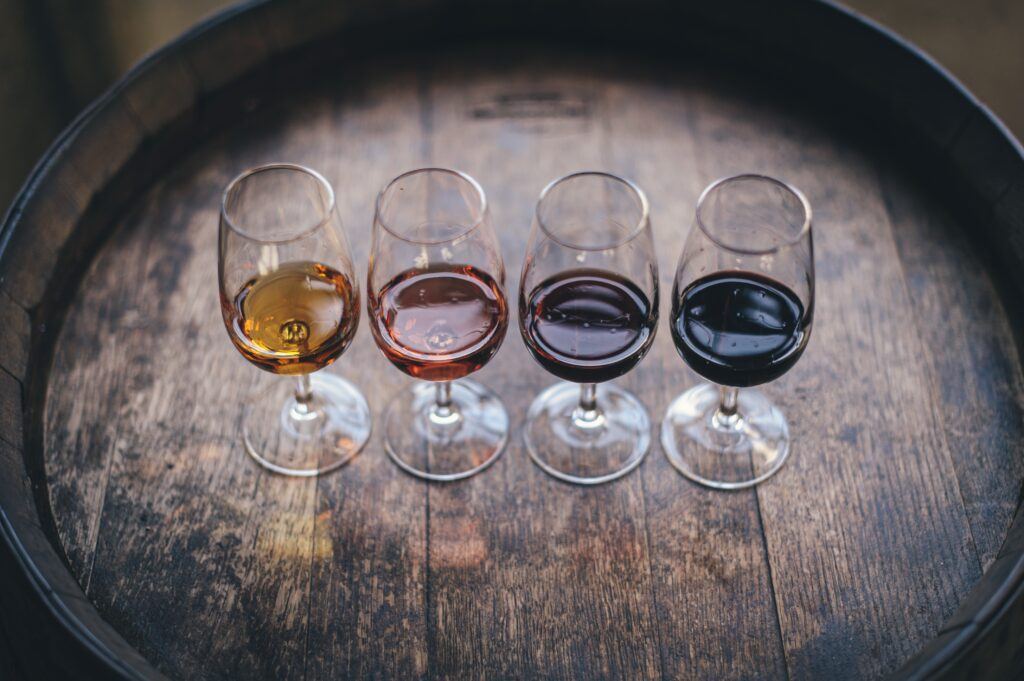
Quick answer: the main styles are ruby (young, fruity), tawny (aged in barrels, nutty and caramel), white (great with tonic) and vintage (the finest, from exceptional years). Taste them in the port lodges of Gaia, in the Douro Valley where the grapes grow, or order a port tonic on a Porto terrace in summer.
How port is made
Grapes from the Douro, the world’s oldest demarcated wine region (1756), are fermented for a couple of days, then grape brandy is added to stop the fermentation. That keeps the natural sweetness and raises the alcohol to around 19–22%. The wine was traditionally shipped down the river on rabelo boats to age in Gaia’s cool lodges.
The main types
Ruby
Young, deep red and fruity, aged briefly in large vats. Affordable and easy to drink. Reserve ruby is a step up in quality.
Late Bottled Vintage (LBV)
From a single year, aged 4–6 years before bottling. Richer than ruby, and great value.
Vintage
The finest port, made only in exceptional years that are “declared” by the producers. Bottled young and aged for decades in the bottle. Decant it before serving.
Tawny
Aged in small wooden barrels, which gives it an amber colour and flavours of nuts, caramel and dried fruit. Aged tawnies are labelled 10, 20, 30 or 40 years old.
Colheita
A tawny from a single harvest year, aged for at least seven years in wood.
White
Made from white grapes, from dry to sweet. Mix it with tonic, ice, lemon and mint for the classic port tonic.
Rosé
A newer, lighter style, served chilled or in cocktails.
How to drink port
- Temperature: serve tawny and white slightly chilled; ruby and vintage at cool room temperature.
- With food: tawny with desserts, nuts and cheese; ruby and vintage with blue cheese or chocolate; white port tonic as an aperitif.
- Once open: rubies and tawnies keep for a few weeks; vintage port should be drunk within a day or two.
Where to taste port
- Vila Nova de Gaia: the famous lodges (Graham’s, Taylor’s, Sandeman, Cálem, Cockburn’s and more) offer cellar tours and tastings, from about €15–40. See port tastings.
- The Douro Valley: taste at the quintas where the grapes are grown. See Douro wine tours and Douro hotels.
- Wine bars in Porto and Lisbon, by the glass.
Buying port
- Good value: a decent LBV or 10-year-old tawny costs far less in Portugal than abroad.
- Taking it home: pack bottles in checked luggage, or ask the lodge about shipping.
More: Portugal’s wine regions, vinho verde and what to eat in Porto.
Some links in this guide are affiliate links (GetYourGuide, Booking.com, Discover Cars). If you book through them we may earn a small commission at no extra cost to you. It helps keep our groups and this site free.
Still got questions?
Ask 305,000+ travellers and locals in our free Facebook groups.