
What to Eat in Madeira: 15 Dishes and Drinks to Try
Madeira’s food is island cooking: beef grilled on bay-laurel sticks, a deep-sea fish served with banana, warm garlic flatbread with almost everything and a strong poncha to finish. Here are 15 dishes and drinks to try, with where to find them.
Quick answer: start with espetada and bolo do caco, try espada (black scabbardfish) with banana and grilled lapas (limpets), take home a bolo de mel, and drink a poncha in Câmara de Lobos and a glass of Madeira wine in Funchal. Buy fruit at the Mercado dos Lavradores, but ask the price per kilo first.

Meat
1. Espetada
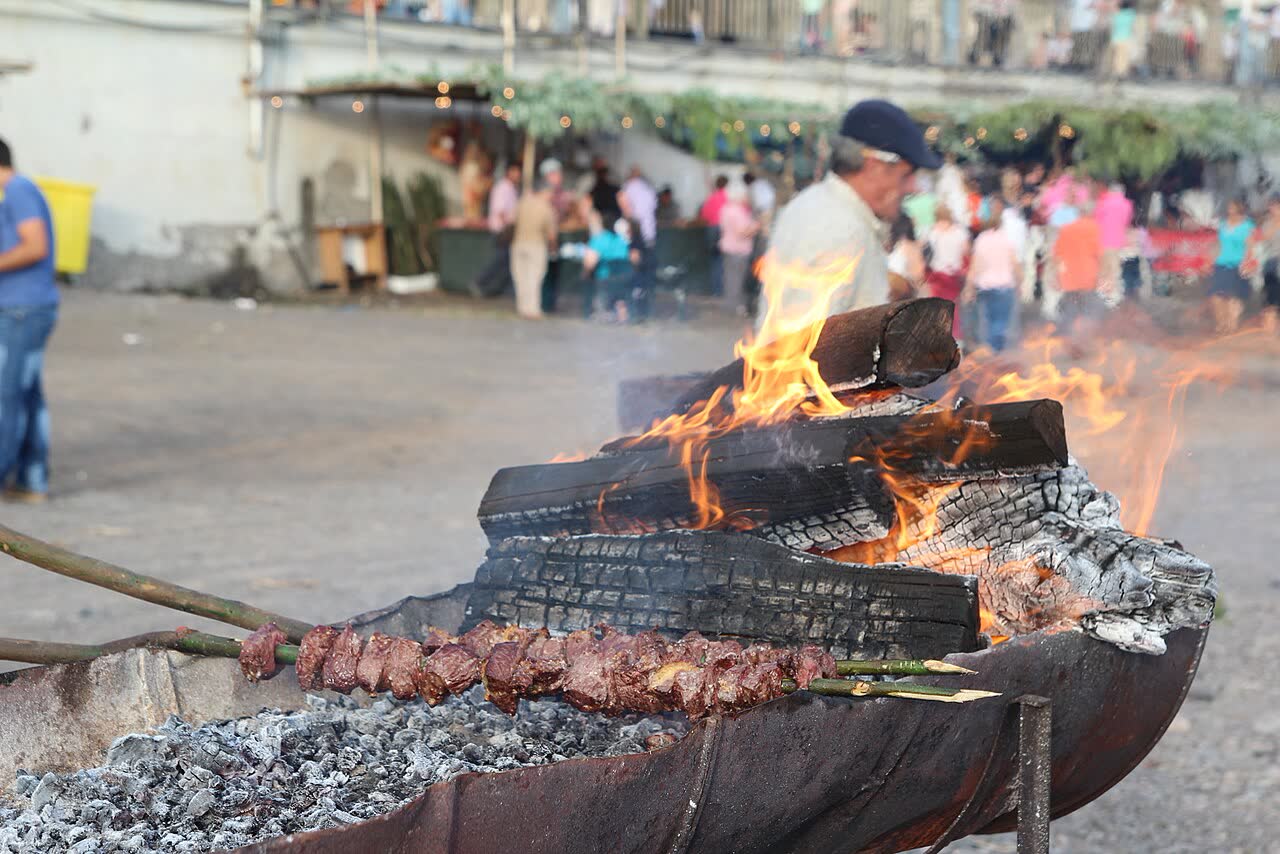
Chunks of beef seasoned with garlic and bay leaf, threaded on a bay-laurel stick and grilled over charcoal. Many places now use metal skewers, and the meat often arrives hanging from a hook at the table, with bolo do caco and milho frito. Once festival food, when beef was too dear for every day, it’s still the star of the summer village festivals (arraiais), usually June to August.
2. Carne de vinha d’alhos
Pork marinated for several days in white wine, garlic and spices, then fried. Once the Christmas Eve dish, it’s now served all year, on a plate or in a bread roll.
Fish and seafood
3. Espada with banana
The black scabbardfish looks fearsome and lives in very deep water, but its white fillets are soft and mild. The classic way is breaded and fried, with fried banana; some places add passion fruit. English menus sometimes say “swordfish”, but swordfish (espadarte) is a different fish. Câmara de Lobos is the home port of much of the espada fleet.
4. Lapas (limpets)
Limpets grilled in their shells with garlic, butter, parsley and lemon, brought sizzling to the table in the pan. Mop up the juices with bolo do caco. Stocks are under pressure: since 2024 picking has been banned for six months of each year, so never take them from the rocks yourself.
5. Bife de atum (tuna steak)
Tuna steaks marinated for hours, then fried, with the marinade turned into a sauce. The fishing village of Caniçal, near the eastern tip, is a good place to order it after a walk on Ponta de São Lourenço.
6. Gaiado
Skipjack, a smaller kind of tuna. In Caniçal many families still salt and dry it at home. The easiest way to try it is the village’s Festival do Atum, do Gaiado e do Marisco, usually in July (10 to 12 July in 2026).
Breads and sides
7. Bolo do caco
A round flatbread made with sweet potato in the dough and cooked on a hot basalt slab, the caco. It comes warm, split and spread with garlic and parsley butter, and also makes the island’s favourite sandwich, the prego no bolo do caco, with a thin steak inside. Madeira’s sweet potato has had EU protected (PDO) status since 2024. See bifanas and pregos.
8. Milho frito
Cornmeal cooked until thick, left to set, then cut into cubes and fried. It’s the classic side for espetada and good for soaking up sauce.
Sweets
9. Bolo de mel and broas
Bolo de mel is a dark, dense cake made with sugar-cane honey (a dark syrup, not bee honey), spices, walnuts, Madeira wine and candied peel. By tradition it’s baked on 8 December for Christmas and broken by hand, not sliced. It keeps for months, so it’s the best edible souvenir; try it with a glass of Malmsey. Broas are small honey biscuits flavoured with cinnamon and lemon zest, crunchy outside and soft inside.
10. Queijadas
Madeira’s queijada is a small, flat tart of curd cheese, eggs and sugar, sold in pastry shops around the island. See Portuguese desserts.
Fruit
11. Anona, passion fruit and bananas
- Anona: Madeira’s custard apple, a cherimoya with EU protected status. Spoon out the creamy flesh and leave the black seeds.
- Maracujá (passion fruit): purple, yellow and hybrid kinds, plus fruit labelled by flavour at the market, such as banana or pineapple passion fruit. It also flavours poncha, puddings, fish sauces and Brisa Maracujá, a local soft drink.
- Bananas: small and sweet, grown on terraces mainly along the south coast, with their own EU protected name.
Drinks
12. Poncha
The original is aguardente de cana (sugar-cane rum), honey and lemon juice, stirred hard with a wooden stick, the mexelote, and served without ice. It’s said to have started in Câmara de Lobos, warming fishermen at sea. Bars also make orange, tangerine and passion fruit versions, often with free peanuts or lupin beans. It’s sweet but strong, so one or two is plenty.
13. Nikita
Another Câmara de Lobos favourite for hot days: ice cream, pineapple, pineapple juice and pale beer. Alcohol-free versions swap the beer for a soft drink.
14. Coral beer
Madeira’s own golden lager, in almost every bar on the island. At festivals it’s sometimes mixed with laranjada, a local orange soda made since 1872. See Portuguese beer.
15. Madeira wine
The island’s fortified wine is heated as it ages and comes in four classic styles, from dry Sercial to sweet Malmsey. Tastings at Blandy’s in Funchal start at about €17 in 2026. See the Madeira wine guide.
Want to try lots at once? A Funchal food tour usually starts at the market, then moves through the Old Town for poncha, bolo do caco and Madeira wine. Check what’s included before you book. See Funchal food tours.
Where to eat and drink
- Traditional restaurants: for espetada, espada and tuna steak.
- Snack bars and cafés: the lunchtime prato do dia (dish of the day) is the cheapest proper meal. See Madeira on a budget.
- Poncha bars: small village bars, where a poncha usually costs only a few euros.
- The Old Town: Funchal’s Zona Velha has the most choice, but some lanes have touts and tourist menus cost more, so eat a street or two back. See Funchal Old Town.
- The bill: bread, butter and olives put on the table (the couvert) are charged if you eat them, and fish may be priced by weight, so ask first.
The Mercado dos Lavradores
Funchal’s covered market is free and open Monday to Friday 7am to 7pm and Saturday 7am to 2pm, closed on Sundays and public holidays. Reach the fish hall before about 11am to see espada and tuna on the slabs. Some fruit stalls overcharge visitors: before you accept a taste, ask quanto custa o quilo? (how much per kilo?), ask for one or two pieces, and get the total before anything is bagged. See our Mercado dos Lavradores guide.
Câmara de Lobos for poncha
This fishing town about 15 minutes west of Funchal is where poncha and the nikita are said to have started, and its small harbour bars are the classic place to drink one. Stay on for espada at dinner. Buses heading west take about 15 to 25 minutes; every Madeira route got a new three-digit number on 9 March 2026, so ignore older guides. See Câmara de Lobos.
Christmas specialities
The official festive season runs from 1 December 2026 to 10 January 2027.
- 8 December: the traditional day to bake bolo de mel. Look out for palitos de cerveja, a beer-flavoured broa, too.
- Missas do Parto: early-morning masses from 16 to 24 December, often followed by poncha and snacks outside.
- Noite do Mercado: on 23 December the market and nearby streets fill with stalls, poncha and carne de vinha d’alhos sandwiches.
See Madeira in winter.
FAQ
What food is Madeira famous for?
Espetada, espada with banana, bolo do caco with garlic butter, grilled limpets and bolo de mel, with poncha and Madeira wine to drink.
What is poncha made of?
The original is sugar-cane rum (aguardente de cana), honey and lemon juice, stirred with a wooden stick. Fruit versions use orange, tangerine or passion fruit.
Is black scabbardfish the same as swordfish?
No. Espada is a long, deep-water fish with soft white fillets; swordfish is espadarte. Some English menus mix them up.
What food can you take home from Madeira?
Bolo de mel keeps for months, and Madeira wine lasts well even once opened. Check your home country’s rules before flying fresh fruit home.
More: what to eat in Portugal, what to eat in Lisbon and things to do in Funchal.
See also: the Madeira travel guide, food tours in Portugal, New Year’s Eve in Madeira and Portugal souvenirs.
Some links in this guide are affiliate or referral links (GetYourGuide, Booking.com, Discover Cars, Welcome Pickups, Airalo, Yesim, Saily, Tiqets, Radical Storage, EKTA, AirHelp, Uber). If you book or sign up through them we may earn a small commission or ride credit at no extra cost to you. It helps keep our groups and this site free.
Still got questions?
Ask 305,000+ travellers and locals in our free Facebook groups.