
Trip guides / Algarve
Arrifana Beach: Surf, Viewpoints and How to Visit
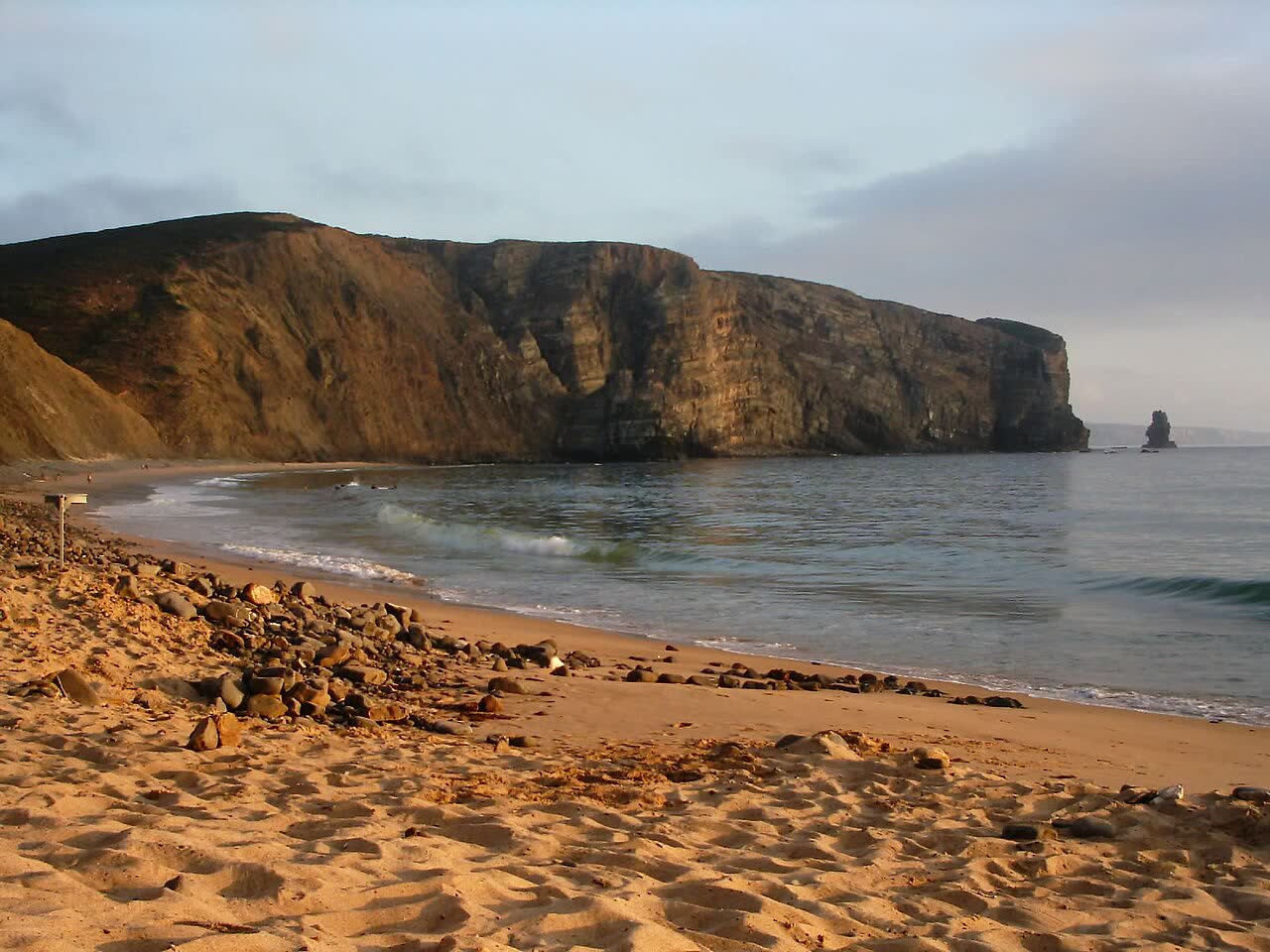
Arrifana is one of the most photographed beaches on the Algarve’s wild west coast: a curved bay below high cliffs, a needle-shaped rock in the sea, a tiny fishing harbour and a ruined 17th-century fort on the headland. Surfers come all year, and the sunset alone is worth the drive.
Quick answer: Arrifana is about 10km by road southwest of Aljezur, inside the Costa Vicentina natural park. Park at the top, walk down, and stay for sunset at the fort. Lifeguards were on duty from 1 June to 30 September in 2026, and group surf lessons cost about €45. Arrive early in summer, as parking is limited.

Where it is
Follow the signs off the N120 just south of Aljezur town. Allow about 15 minutes from Aljezur and around 40 minutes from Lagos. The beach and its small village sit inside the Southwest Alentejo and Vicentine Coast Natural Park, so there are no big hotels. See our Aljezur guide.
The beach
About 500 metres of sand curve around a bay sheltered by tall schist cliffs. Near the southern end, the Pedra da Agulha (Needle Rock) rises straight out of the water. At the northern end, below the fort, is a small harbour still used by local fishermen, many of whom gather percebes (goose barnacles) from these rocks.
Arrifana flew a Blue Flag in 2026, and its water was rated excellent. There are toilets, showers and a bar-restaurant, and a live MEO Beachcam lets you check the waves before you go.
Surfing at Arrifana
The bay faces southwest, while the cliffs block the north wind. When big winter northwesterly swells make the open beaches nearby too wild, the swell wraps into the bay smaller and cleaner, so Arrifana often works when other spots don’t. The Algarve’s first surf championship was held here in 1983.
- Beginners: the beach break in the middle of the bay. Summer usually brings the smallest waves.
- Experienced surfers: a fast right-hand reef break by the harbour. It needs a solid swell and breaks over shallow rock, so it is no place for learners.
- Lessons: in 2026, local schools charged about €45 for a group lesson of 1.5 to 2 hours, with board and wetsuit. Prices change with the season, so check when you book.
The water stays cool, so wear a full wetsuit. See surfing in Portugal and surf camps in Portugal.
The fort and the sunset
On the northern headland, about 70 metres above the sea, stand the ruins of the Fortaleza da Arrifana. It was built in 1635 to defend the bay and a tuna fishery that had worked here since 1516. The 1755 earthquake left little more than the gateway and the gun battery. Restored around 2011, it is now an open viewpoint, usually free.
The sun sets over the open Atlantic, straight in front of you. In summer, come early for a parking space, and bring a layer. About 1km north, on the Ponta da Atalaia headland, are the excavated remains of the 12th-century Ribat of Arrifana.
Getting down and parking
- The descent: from the car park at the top, a steep paved road and wooden steps lead down to the sand. The climb back up is hard work with a surfboard or small children, and the beach is not classed as wheelchair accessible.
- Parking: limited, mainly at the top and along the village roads. In July and August, arrive before about 10am or after 5pm, and park only in marked spaces. The lane down to the harbour is narrow, so stay at the top.
- Campervans: no overnight stays outside authorised sites in the natural park.
- Without a car: buses reach Aljezur, then take a taxi.
Lifeguards and safety
- Lifeguards: the 2026 bathing season ran from 1 June to 30 September. Outside it, there are none.
- Currents: rips form near the rocks and on bigger days. Swim between the flags, away from the surfers.
- Cliffs: the environment agency flags Arrifana for rockfall risk. Don’t sit under the cliffs, and stay back from the edge at the fort.
Where to eat
A handful of restaurants and cafés in the village and by the beach serve grilled fish, octopus and seafood, and some close in winter. For more choice, eat in Aljezur.
Nearby beaches
- Monte Clérigo: a short drive north through Vale da Telha, with rock pools at low tide.
- Amoreira: further north, where a river meets the sea. Calm river water for children at low tide.
- Bordeira and Amado: to the south, around Carrapateira: huge dunes and a top surf beach. See Carrapateira and Bordeira.
- Odeceixe: at the Algarve’s northern tip. See Odeceixe.
Where to stay
- Aljezur: the castle town, with shops and restaurants, about 15 minutes away.
- Vale da Telha: a spread-out area of villas and holiday homes between Aljezur and the coast, the closest base for Arrifana and Monte Clérigo. You need a car.
- Arrifana itself: a few guesthouses and surf camps, some with lessons included.
For nightlife, stay in Lagos. See where to stay in the Algarve.
Book ahead: beds on this coast fill early for July and August. See places to stay in and around Aljezur.
Walking the Fishermen’s Trail
Two stages of the Rota Vicentina’s Fishermen’s Trail meet here. The trail is free and waymarked, and best walked between September and June.
- Aljezur to Arrifana: about 17km, 4 to 5 hours, via Monte Clérigo and Ponta da Atalaia.
- Arrifana to Carrapateira: about 19km, around 5 hours, past cliffs up to 100 metres high. There is nowhere to buy water, so carry at least 1.5 litres. If the sea is rough at Bordeira, take the inland alternative.
The inland Historical Way also passes through. See Costa Vicentina and hiking in Portugal.
FAQ
Is Arrifana good for beginner surfers?
Yes, on small to medium days, when schools teach in the white water of the main beach. The reef by the harbour is for experienced surfers only.
Is Arrifana beach safe for swimming?
It is more sheltered than most beaches on this coast, but currents are still strong. Swim only when lifeguards are on duty and stay between the flags.
Where do you park for Arrifana beach?
At the top, before the road drops to the beach, or in marked spaces in the village. Spaces run out by late morning in July and August.
Is the Arrifana fort free to visit?
Yes. It is an open-air ruin and viewpoint, usually with no charge.
More: the best Algarve beaches and Lagos and the western Algarve.
See also: the best beaches in Portugal, the best sunset spots and hiking in the Algarve.
Some links in this guide are affiliate or referral links (GetYourGuide, Booking.com, Discover Cars, Welcome Pickups, Airalo, Yesim, Saily, Tiqets, Radical Storage, EKTA, AirHelp, Uber). If you book or sign up through them we may earn a small commission or ride credit at no extra cost to you. It helps keep our groups and this site free.
Still got questions?
Ask 305,000+ travellers and locals in our free Facebook groups.