
Igreja do Carmo, Porto: The Famous Tiled Church
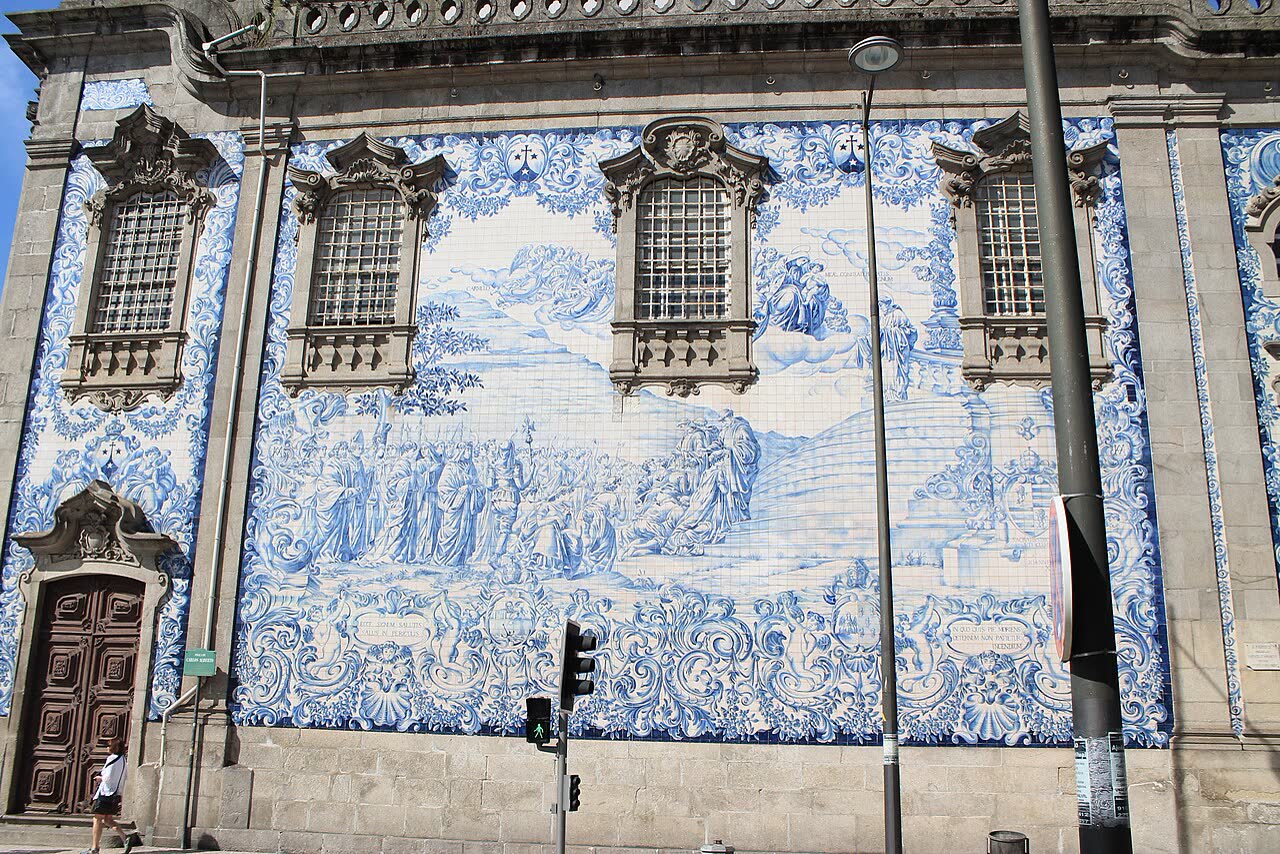
The Igreja do Carmo is the Porto church with the huge blue-and-white tiled side wall, near Livraria Lello and the Clérigos Tower. Look again and it’s really two churches, with a house barely a metre wide squeezed between them. Here’s what to see and what the ticket covers.
Quick answer: the 1912 tile wall is free to see from the street. Inside, a combined €8 ticket covers the Carmo church, the hidden house and the catacombs. It’s open daily from 9:30am to 6pm (April to October) or 5pm (November to March). Allow 30 to 45 minutes. Trams 18 and 22 start at the Carmo stop beside it.

Two churches side by side
Igreja dos Carmelitas (17th century)
The older, plainer church was built between 1619 and 1628 for a convent of Discalced Carmelite friars that no longer exists. Behind its sober Mannerist front are gilded baroque and rococo altarpieces, an organ and a high altar by the master carver José Teixeira Guimarães. It’s run separately and is usually free to step into when open, but hours vary.
Igreja do Carmo (18th century)
The Carmo was built between 1756 and 1768 for the Ordem Terceira do Carmo, a lay brotherhood founded in 1736 that still runs it. José de Figueiredo Seixas designed it, with changes by Nicolau Nasoni, the architect of the Clérigos. The pair were classified together as a National Monument in 2013.
The famous tile wall
The Carmo’s long side wall on Rua do Carmo is covered by one giant azulejo panel dated 1912. Silvestre Silvestri drew the design and Carlos Branco painted it. The tiles were made across the river in Vila Nova de Gaia, usually credited to the Senhor do Além and Torrinha factories. The scenes honour Our Lady of Mount Carmel and the beginnings of the Carmelite order.
The hidden house between the churches
Between the two fronts is the Casa Escondida, often called the narrowest house in Porto. Built in 1768, it’s about a metre wide at the front (some sources say 1.5 metres), with three narrow floors.
Guides often say it kept nuns and monks apart, but the Carmelitas convent housed friars and the Carmo belonged to a lay order, so treat that as legend. The other common explanation is an old rule that two churches couldn’t share a wall. People lived in it until recent decades, first the Carmo’s chaplains and latterly the church caretaker. It opened to visitors in 2019.
What you see inside
- The church: a single nave lined with gilded altarpieces designed by Francisco Pereira Campanhã.
- The Casa Escondida: the cramped rooms of the hidden house. Expect stairs and no lift.
- The sacristy and historic rooms: the order’s old rooms and religious art.
- The catacombs: burial galleries below the church.
Tickets and opening hours in 2026
- Price: €8 for the church and visitor route together, according to the order’s website. There’s no church-only ticket listed, so plan on paying to go in.
- Where to buy: at the door, or online through the Ordem do Carmo website.
- Hours: daily 9:30am to 6pm from April to October, and to 5pm from November to March. Mass is at 9am daily, and services come first.
Hours and prices can change, so check before you go.
Best photo spot and time
For the whole tiled wall, cross Rua do Carmo and shoot from the far pavement, on the university side. If a tram is waiting at the stop, work it into the frame. For the hidden house, stand back so both church fronts frame it.
Weekday mornings are quietest. Glazed tiles glare in strong midday sun, so morning, late afternoon or a cloudy day gives the most even blue. See Porto’s best photo spots.
Getting there
- On foot: the churches stand beside the Cordoaria garden. From São Bento station it’s about 10 to 15 minutes uphill.
- Tram: tram 18 starts at Carmo and runs to the Tram Museum and Foz, and the tram 22 loop to Batalha starts here too. A single ride is €6 on board, and Andante tickets aren’t valid. See Porto’s trams.
Combine it with nearby sights
- Livraria Lello: a couple of minutes away on Rua das Carmelitas. Book a timed ticket (about €8 to €10, deducted from a book). See the Livraria Lello guide.
- Clérigos Tower: 225 steps to a 360-degree view, about €10 with the museum. See the Clérigos Tower guide.
- Praça de Lisboa: a rooftop lawn with more than 50 olive trees above a row of shops, between Lello and the tower.
- Jardim da Cordoaria: the shady garden across the road, with Juan Muñoz’s bronze group Thirteen Laughing at Each Other. See free things to do in Porto.
- Rua da Galeria de Paris: a narrow street of bars nearby, busiest late at night.
A good morning: Lello at 9am, the Carmo at 9:30am, then Clérigos. Allow two to three hours.
FAQ
Is the Igreja do Carmo free to visit?
The tiled wall is free to see at any time. Going inside costs €8, including the hidden house and catacombs.
Can you go inside the narrowest house in Porto?
Yes. The Casa Escondida has been on the Carmo visitor route since 2019, included in the €8 ticket.
Who made the Igreja do Carmo tiles?
The 1912 panel was designed by Silvestre Silvestri and painted by Carlos Branco, with tiles made in Vila Nova de Gaia.
Which tram stops at the Igreja do Carmo?
Trams 18 and 22 both start at the Carmo stop beside the church. A single ride costs €6, paid on board.
More: Porto’s most beautiful churches and a guide to azulejos.
See also: things to do in Porto, Porto in one day, Porto nightlife and São Francisco church.
Prices and details change, so please double-check before you travel. Spotted something out of date? Tell us in the groups.
Still got questions?
Ask 305,000+ travellers and locals in our free Facebook groups.