
Laurisilva of Madeira: The UNESCO Laurel Forest Guide
Madeira’s Laurisilva is a laurel forest that has survived from a time when forests like it covered much of southern Europe. Today it cloaks the steep, misty north side of the island, and it’s the reason so many levada walks feel like a trip into another world. Here’s what makes it special, and the easiest places to see it.
Quick answer: the Laurisilva of Madeira is a UNESCO World Heritage Site (listed in 1999) covering about 15,000 hectares, roughly a fifth of the island, mostly on the north side. The best places to walk in it are Fanal, Queimadas (for Caldeirão Verde), Ribeiro Frio (for the Balcões viewpoint) and Rabaçal (for 25 Fontes). Official trails need a booked slot on SIMplifica, usually €4.50 per trail. Bring a rain jacket, even in summer.
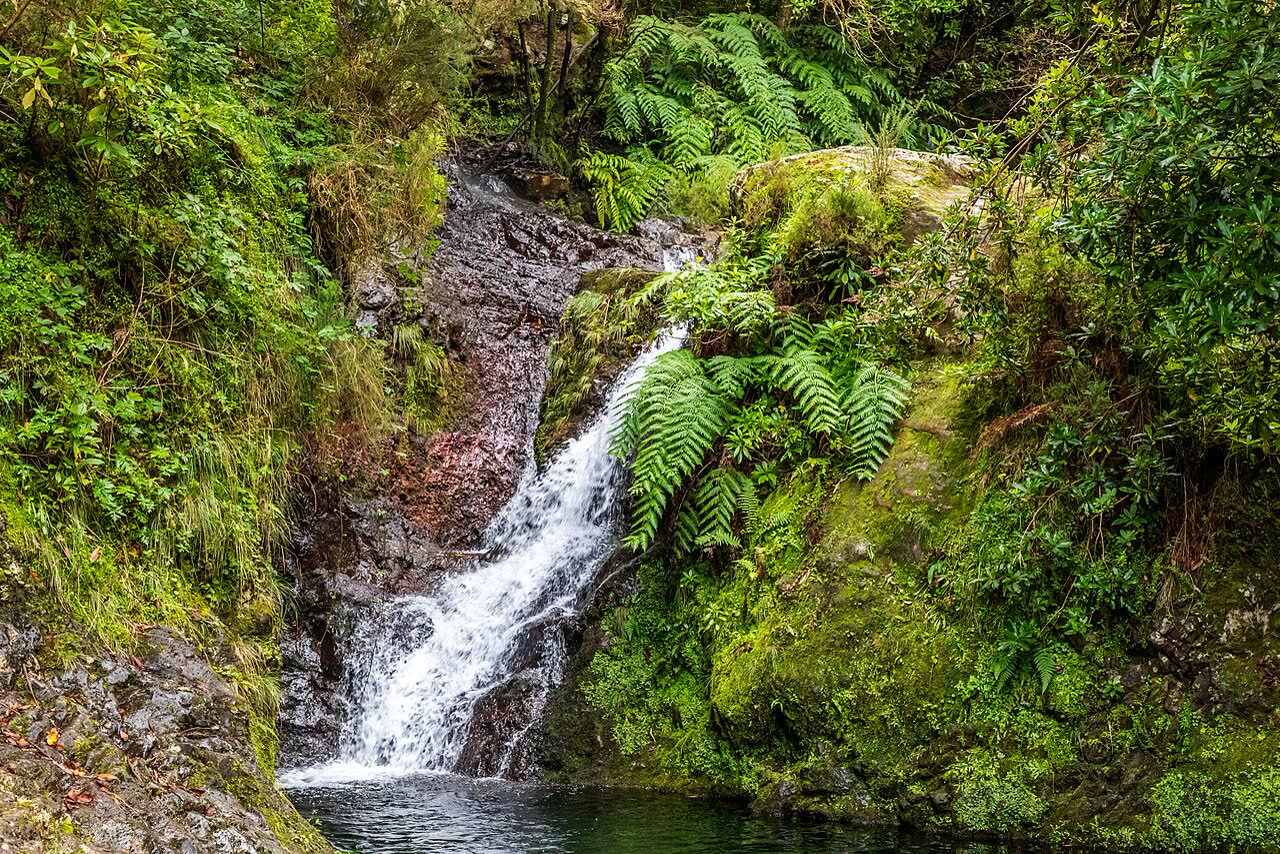
,_Ribeiro-Frio-Wasserfall_--_2025_--_1502.jpg)
What is the Laurisilva?
Laurisilva (Laurissilva in Portuguese) means “laurel forest”. It’s an evergreen, subtropical forest dominated by trees from the laurel family, with shiny, leathery leaves, thick moss, ferns and lichens. Forests like this once grew across southern Europe. As the climate cooled and dried they vanished from the mainland, surviving only on the Atlantic islands of Madeira, the Azores and the Canaries.
Madeira’s is the largest and best-preserved of these fragments, and IUCN, UNESCO’s adviser on natural sites, says about 90% of it is believed to be primary forest. UNESCO added it to the World Heritage list in 1999, and it’s still Portugal’s only natural World Heritage Site. It lies inside the Madeira Natural Park, created in 1982.
Why it matters
- It makes the island’s water: the trade winds push clouds against the northern slopes, and the trees catch water from the mist as well as the rain. That water feeds springs and streams, and the levadas carry it south to farms, towns and hydro-electric stations.
- It holds the mountains together: the roots stabilise the steep soil and reduce the risk of landslides.
- It’s full of species found nowhere else: IUCN counts at least 76 plant species endemic to Madeira in the site, and more than 500 endemic invertebrates.
Trees and wildlife to look for
- Til (Ocotea foetens): the giant of the forest, with huge, gnarled trunks. The famous old trees at Fanal are tils.
- Loureiro (Laurus novocanariensis): the laurel itself.
- Vinhático (Persea indica) and barbusano (Apollonias barbujana): two more native laurels.
- Birds: the bold Madeiran chaffinch, the tiny Madeiran firecrest and, if you’re lucky, the shy Trocaz pigeon (the Madeira laurel pigeon), which lives only on Madeira and spreads the forest’s seeds. Please don’t feed the birds, however tame they seem.
Where to see the laurel forest
The easiest ways in, with our detailed guide for each:
- Fanal: a high grassy plateau in the northwest with ancient, twisted til trees, at its most magical in fog. You can wander from the car park, or walk the PR13 Vereda do Fanal. See Fanal forest.
- Ribeiro Frio and Balcões: a forest hamlet on the mountain road between Funchal and Faial, with a trout farm and an almost flat 1.5km path (PR11) to the Balcões viewpoint over the valleys. The easiest taste of the Laurisilva. See Vereda dos Balcões.
- Queimadas and Caldeirão Verde: from the thatched house in the Queimadas Forest Park above Santana, PR9 follows a levada through deep forest and tunnels to a tall waterfall. Allow 4 to 5 hours. See Levada do Caldeirão Verde.
- Levada do Rei: a quieter, nearly flat levada (PR18) from São Jorge into the forest. See Levada do Rei.
- Rabaçal and 25 Fontes: in the west, PR6 drops from the Paul da Serra plateau into a green valley of laurel forest and waterfalls. See Levada das 25 Fontes.
For the full list of trails, see Madeira levada walks.
Getting there
Most laurel forest is on the north side, up to about an hour and a quarter by car from Funchal. Parking at popular trailheads fills early, so arrive before 9am. Ribeiro Frio is on a bus route from Funchal; the other trailheads are far easier by car, taxi or tour. If you don’t want to drive, a guided levada walk usually includes transport, and many west Madeira tours stop at Fanal. See getting around Madeira.
Trail booking rules
Since January 2026, every official “PR” trail on Madeira needs a booked 30-minute start slot on the regional government’s SIMplifica portal (simplifica.madeira.gov.pt). The general fee is €4.50 per trail; children aged 12 and under go free but still need a booking. Walking a PR trail without a booking can mean a fine. Check the trail’s page on Visit Madeira before you go, as prices can change. Our levada walks guide explains day passes and the PR1 fee.
Best time to go
The forest is green all year. Spring and autumn are the most comfortable for walking, summer is busier, and winter brings more rain and the odd trail closure, but the fullest waterfalls. The north is cloudier than Funchal in every season. Go early for quieter paths and more birds. See the best time to visit Madeira.
What to wear and bring
- Shoes with grip: levada paths are often wet, muddy and mossy.
- Layers and a rain jacket: the forest is cooler and damper than the coast, even on a sunny day in Funchal.
- A headtorch: for the tunnels on Caldeirão Verde.
- Water, snacks and your booking saved offline: cafés are few and phone signal is patchy.
Help protect it
Fire and invasive plants are the biggest threats to the Laurisilva. Stay on the marked paths, take your rubbish home, never light a fire or smoke on the trails, and don’t pick plants or feed the wildlife.
FAQ
Is the Laurisilva of Madeira a UNESCO site?
Yes. It was listed in 1999 and is Portugal’s only natural World Heritage Site. See UNESCO sites in Portugal.
Where is the best place to see the laurel forest in Madeira?
Fanal for ancient trees and fog, Ribeiro Frio and the Balcões path for the easiest short walk, and Caldeirão Verde for a longer hike deep in the forest.
Do you need to pay to walk in the Laurisilva?
Only on official PR trails, which need a SIMplifica booking, usually €4.50 per trail in 2026. Under-12s are free but must be booked.
How old is Madeira’s laurel forest?
It’s a relic of a forest type that covered southern Europe millions of years ago. Visit Madeira describes it as about 20 million years old, and some of its trees are centuries old.
More: the Madeira travel guide and things to do in Funchal.
See also: Fanal forest, Vereda dos Balcões and Levada do Caldeirão Verde.
Some links in this guide are affiliate or referral links (GetYourGuide, Booking.com, Discover Cars, Welcome Pickups, Airalo, Yesim, Saily, Tiqets, Radical Storage, EKTA, AirHelp, Uber). If you book or sign up through them we may earn a small commission or ride credit at no extra cost to you. It helps keep our groups and this site free.
Still got questions?
Ask 305,000+ travellers and locals in our free Facebook groups.