
What to Eat in the Algarve: Dishes, Desserts and Drinks
Algarve food is simple and seasonal: fish grilled over charcoal, clams and oysters from the Ria Formosa, chicken with chilli oil, Monchique pork and sweets made from almonds, figs and egg yolks. Here are 16 dishes and drinks to try, the festivals built around them and how to avoid surprises on the bill.
Quick answer: share a cataplana, eat grilled sardines in summer, try octopus in Santa Luzia and clams and oysters in Olhão, go to Guia for piri-piri chicken, and finish with a Dom Rodrigo and a small medronho. Fish is often priced by the kilo, so ask first.
.jpg)
Fish and seafood
1. Cataplana
The signature dish: seafood, fish or pork and clams steamed in a sealed copper pan with tomato, peppers, garlic and wine. It’s usually for two and takes 30 to 45 minutes, so order early. See our cataplana guide.
2. Grilled sardines
Grilled whole over charcoal and served on bread with boiled potatoes and pepper salad, best from about June to September. Portimão’s riverside Sardine Festival ran from 4 to 9 August in 2026, with free entry. See Portuguese sardines.
3. Octopus
Santa Luzia, a fishing village about 3km west of Tavira, calls itself the octopus capital, and boats still land octopus at its quay, some caught in traditional pots called alcatruzes. Order it grilled, in a salad or as arroz de polvo, a soupy octopus rice. See Tavira and the eastern Algarve.
4. Clams and conquilhas
Official 2022 figures put the Ria Formosa at more than 90% of Portugal’s farmed bivalves. Order amêijoas à Bulhão Pato, clams steamed open with olive oil, garlic and coriander. Conquilhas are tiny wedge clams gathered from sandy beaches, cooked quickly with garlic or stirred into xerém (below).
5. Ria Formosa oysters
Oysters are farmed in the lagoon channels, and many growers have switched from clams to oysters in recent years. Eat them raw with lemon in Olhão or Faro. See the Ria Formosa Natural Park.
6. Percebes (goose barnacles)
Licensed pickers prise these from the wave-battered rocks around Sagres, Vila do Bispo and Aljezur. Twist off the skin and eat the pink stalk. They’re sold by weight and pricey, and picking in the natural park is usually banned from mid-September to mid-December. See Sagres and Cape St Vincent.
7. Tuna from Tavira
Tavira was a great tuna port: fixed nets trapped the passing shoals each summer until the 1960s, and their anchors still lie in the dunes at Praia do Barril. Look for tuna steak (bife de atum) and muxama, salted, air-dried tuna loin sliced thin. See Ilha de Tavira.
Meat
8. Piri-piri chicken from Guia
A butterflied chicken grilled over charcoal and basted with chilli oil. Guia, just north-west of Albufeira, has been famous for it since the 1960s; its chicken festival ran from 29 July to 2 August in 2026. See piri-piri chicken.
9. Monchique pork, presunto and chouriças
The Serra de Monchique is pork country: smoked presunto (cured ham), chouriça, morcela (blood sausage), farinheira (a soft sausage of flour and pork fat) and hearty stews. The Feira dos Enchidos sausage fair is usually held on a weekend in early March. See Monchique and Silves.
Sides
10. Xerém
A soft porridge of coarse cornmeal, also spelt xarém, with a name thought to come from Arabic. The classic version is cooked in conquilha broth, often with smoked bacon or chouriço, and finished with coriander. It isn’t on every menu, so order it when you see it.
Sweets
11. Dom Rodrigo
Sweet egg-yolk threads, almond, sugar and cinnamon, wrapped in shiny coloured foil. It began in convent kitchens and is linked above all with Lagos and Tavira. In late 2025 Portugal approved “Dom Rodrigo do Algarve” as a protected regional product, and the request now goes to the EU.
12. Morgado and doce fino
Morgado is a round cake covered in almond paste with a sweet egg filling; Silves and Tavira bakeries are known for it. Doce fino is Algarve marzipan, moulded and painted to look like fruit, fish or animals, once kept for weddings and christenings.
13. Fig, almond and carob sweets
The inland hills grow almonds, figs and carob. Try queijo de figo, a dairy-free “fig cheese” of pressed figs, almonds and spices, dried figs stuffed with almond, and carob cake. They travel well as souvenirs. See Portuguese desserts.
Drinks
14. Medronho
A clear, fiery brandy from the red fruit of the strawberry tree, which grows wild around Monchique. The fruit is picked from October, fermented for weeks and distilled in small copper stills. It’s often around 40 to 50% alcohol, so sip it, or try melosa, sweetened with honey. See Caldas de Monchique.
15. Amarguinha
A sweet bitter-almond liqueur of about 20%. Amarguinha is the best-known brand, and many people use the name for the drink itself. Serve it chilled or over ice after dinner.
16. Algarve wines
There are four DOC areas, Lagos, Portimão, Lagoa and Tavira, plus a regional Algarve label. The only native grape, Negra Mole, gives pale, light reds. Most Algarve wine is drunk locally, so ask for a local white with your fish. See wine tours in Portugal.
Wine tasting: many Algarve estates run tastings, and booking direct is usually cheapest. If you’d rather not drive, see Algarve wine tastings and check what is included.
Food festivals
| Festival | Where | When |
|---|---|---|
| Feira dos Enchidos (sausages) | Monchique | Usually a weekend in early March |
| Arte Doce (sweets fair) | Lagos | 22 to 26 July in 2026, free |
| Festa do Frango (chicken) | Guia, Albufeira | 29 July to 2 August in 2026 |
| Festival da Sardinha | Portimão riverside | 4 to 9 August in 2026, free |
| Festival do Marisco (seafood) | Olhão waterfront | 10 to 15 August in 2026 |
Olhão’s seafood festival usually runs for five or six nights around the second week of August, by the market halls. Unlike the others, it’s ticketed: in 2026 a night cost €12 for adults and €6 for ages 7 to 12, with concerts at about 11pm. See Portugal’s festival calendar.
Markets
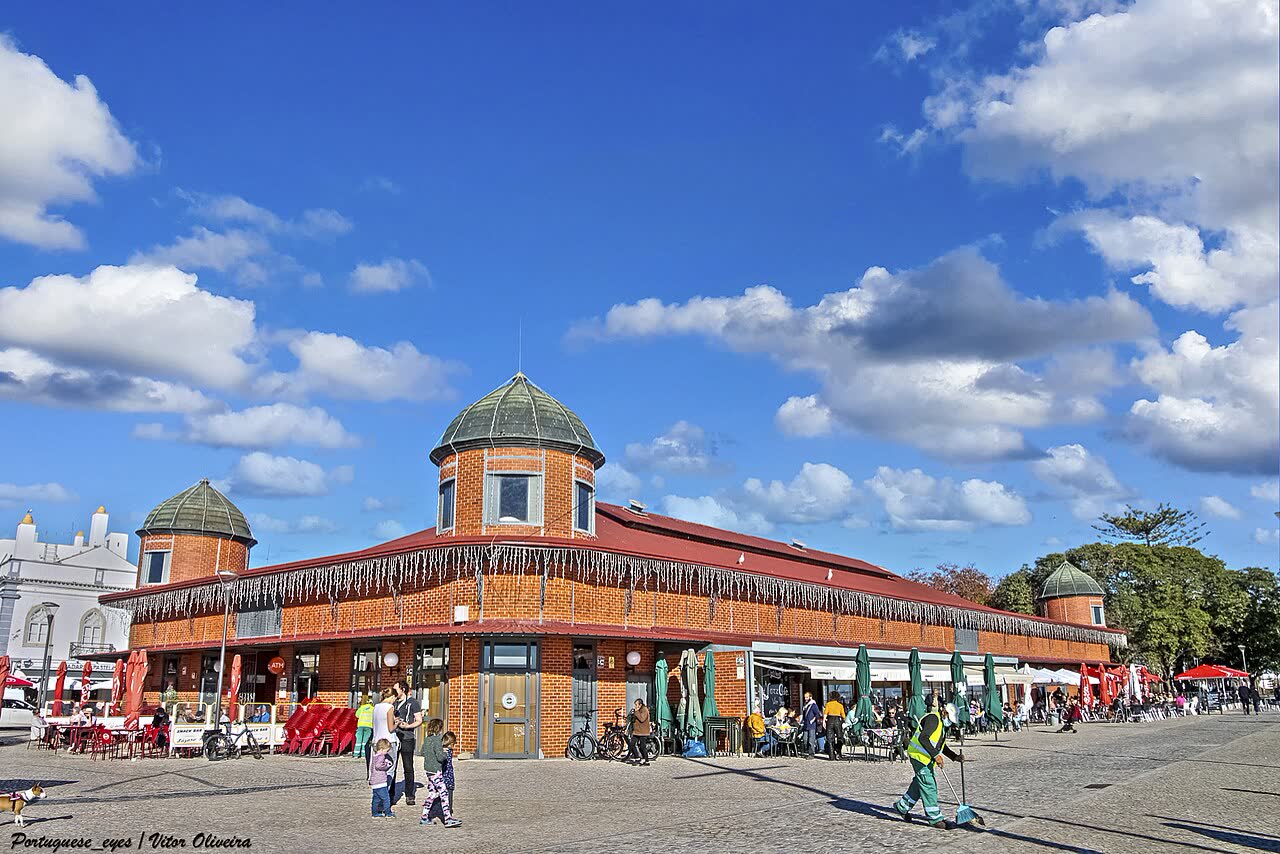
Olhão’s two red-brick waterfront halls, one for fish and one for produce, date from 1916, and a farmers’ market fills the space outside on Saturdays. Loulé’s domed 1908 hall is busiest on Saturdays too. Both usually open Monday to Saturday mornings; go before 10am. See Algarve markets.
Prices and ordering tips
- The couvert: bread, olives and pâté put on the table aren’t free. You only pay for what you eat, so send it back if you don’t want it.
- Fish by the kilo: menus often show a price per kilo (preço ao kg). Ask for the weight before it’s grilled: a 600g fish at €50 a kilo costs €30.
- Dish of the day: the lunchtime prato do dia is usually the best value.
- Out of season: many beach restaurants close or cut their hours in winter. See Algarve beach restaurants.
- Tipping: not expected, but rounding up or leaving 5 to 10% is normal. See tipping in Portugal.
FAQ
What food is the Algarve famous for?
Cataplana, grilled sardines, piri-piri chicken, octopus, Ria Formosa clams and oysters, and almond, fig and egg-yolk sweets such as the Dom Rodrigo.
What is the most typical Algarve dessert?
The Dom Rodrigo, wrapped in coloured foil. Doce fino marzipan, morgado and fig cheese are close behind.
When is the Olhão seafood festival?
Usually around the second week of August. In 2026 it ran from 10 to 15 August, at €12 a night for adults.
Is medronho strong?
Yes. It’s often around 40 to 50% alcohol and usually drunk as a small shot. Melosa, made with honey, is sweeter.
More: what to eat in Portugal, what to eat in Lisbon and the Algarve on a budget.
See also: food tours in Portugal, the best tours in the Algarve, the best restaurants in Lagos, things to do in Olhão and Culatra Island.
Some links in this guide are affiliate or referral links (GetYourGuide, Booking.com, Discover Cars, Welcome Pickups, Airalo, Yesim, Saily, Tiqets, Radical Storage, EKTA, AirHelp, Uber). If you book or sign up through them we may earn a small commission or ride credit at no extra cost to you. It helps keep our groups and this site free.
Still got questions?
Ask 305,000+ travellers and locals in our free Facebook groups.