
What to Eat in the Azores: Local Dishes and Drinks
Azorean food is hearty island cooking: beef and milk from green pastures, fish landed the same morning, fruit grown under glass and a stew cooked by a volcano. Here are 14 dishes and drinks to try, and where to find them.
Quick answer: on São Miguel, eat cozido das Furnas, cooked in the hot ground by Lagoa das Furnas, then bolos lêvedos and queijadas da Vila, and visit a pineapple greenhouse and the Gorreana tea plantation (both free). Order alcatra on Terceira, taste São Jorge and Pico cheese, and drink Pico Verdelho, a Kima passion-fruit soda or an Especial beer.
_3.JPG)
Meat and slow-cooked dishes
1. Cozido das Furnas
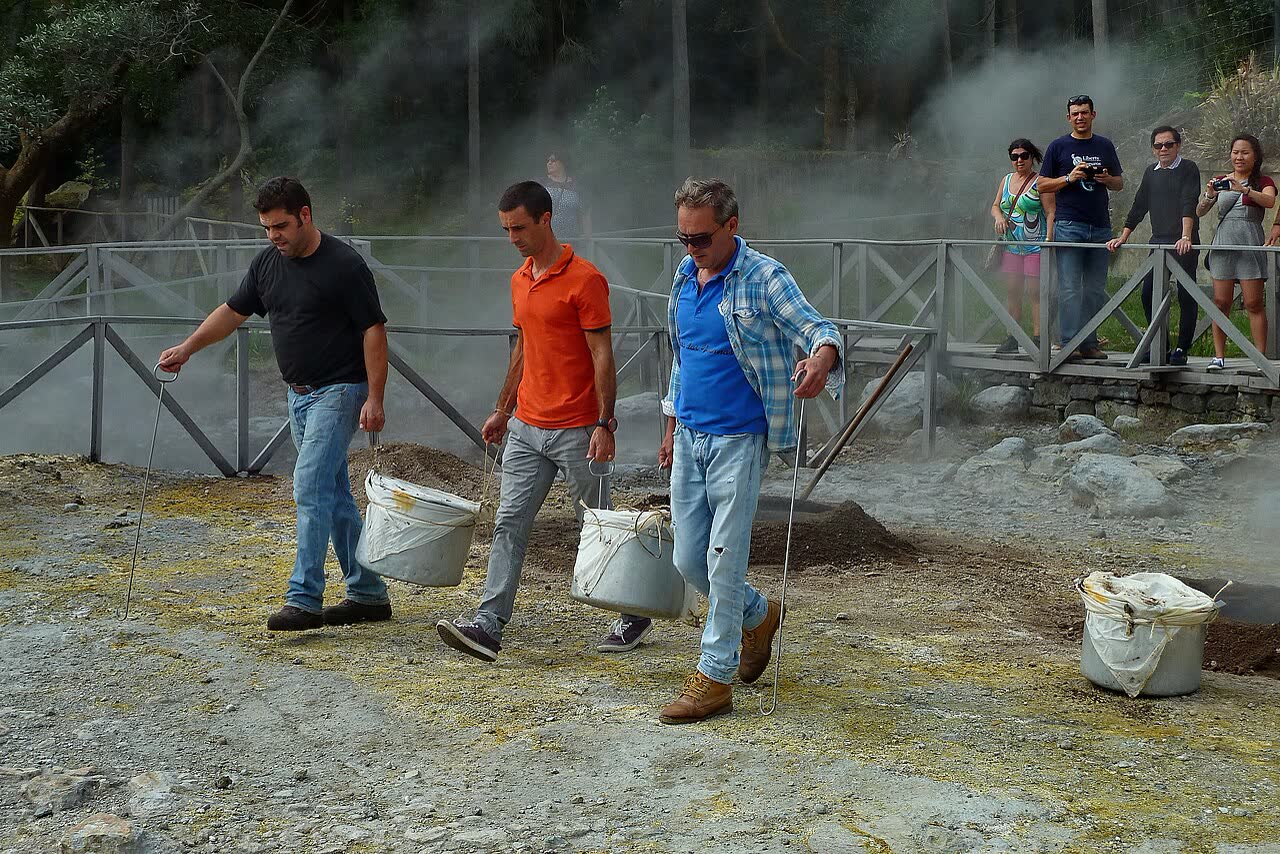
São Miguel’s signature dish is a pot of meats, smoked sausages and vegetables cooked without a stove. Early in the morning, the pots are sealed in sacks and lowered into holes in the hot ground beside Lagoa das Furnas, where they cook for around five hours. Around midday, workers haul them out on ropes, and the stew is served for lunch in the village.
- Watching the pots: visitors who don’t live in the Azores pay about €3 per person to enter the fumarole area by the lake. Arrive by late morning.
- Eating it: portions are big, so share, and book lunch ahead in summer. See the Furnas guide.
2. Alcatra
Terceira’s great dish: beef simmered for about four hours with smoked bacon, onion, garlic, bay, allspice, cloves and wine in an unglazed clay pot. It comes with slices of massa sovada, a soft sweet bread, to mop up the sauce. Fish alcatra is made the same way. See Terceira.
3. Morcela with pineapple, and linguiça with inhame
On São Miguel, morcela (blood sausage spiced with cinnamon and cloves) is fried or baked and served with pineapple or orange, said to help digestion. On Faial and Pico, sausage such as linguiça comes with boiled inhame, a starchy taro root.
Fish and seafood
4. Lapas
Limpets grilled in their shells, usually with garlic butter and lemon: a favourite starter with a cold beer. Harvesting is banned from 1 October to 31 May to protect stocks, so summer is the time for fresh ones.
5. Cracas
Giant barnacles, a delicacy on Faial and around the islands. They’re boiled in seawater, or with garlic, onion and chilli, and served cold. Pull the meat out with a little hook, then drink the juice left in the shell. See Faial.
6. Fresh fish and octopus
Look for boca negra (blackbelly rosefish, named for the black inside of its mouth), goraz (blackspot seabream) and tuna, grilled or in a stew. On Faial and Pico, octopus is stewed in wine. Fish is often sold by weight, so ask the price first. See Portuguese seafood.
Cheese
7. São Jorge and the island cheeses
São Jorge cheese has PDO status: a firm raw cow’s milk cheese in wheels of about 7 to 12kg, matured for at least about three months, with a slightly spicy bite. Older wheels are sharper. Queijo do Pico, also PDO, is small, soft and buttery, aged for just a few weeks. A classic starter is fresh cheese with pimenta da terra, a mashed red pepper paste. See São Jorge and Portuguese cheese.
Breads and sweets
8. Bolos lêvedos
Furnas’s famous flat, round sweet bread, made with milk, eggs, butter and sugar and cooked on both sides in a pan. Eat one warm with butter, cheese or jam, or toasted once it’s a day old.
9. Queijadas da Vila
The sweet of Vila Franca do Campo, on São Miguel’s south coast: a small fluted pastry case filled with a curd of fresh milk, egg yolks and sugar, dusted with icing sugar. The recipe is linked to the cheesemakers who supplied milk to the town’s convent. Cafés across the island sell them.
Fruit and tea
10. Azores pineapple
Grown only on São Miguel, in whitewashed glasshouses on “hot beds” of soil and plant matter that give off warmth as they rot. Each plant takes about two years to fruit, and the sweet-sour result has PDO status. The Arruda plantation in Fajã de Baixo, on the edge of Ponta Delgada, has welcomed visitors since 1919. Entry is free, it opens daily (usually from 9am to between 6pm and 8pm, by season), and the shop offers a free taste of pineapple liqueur. See Ponta Delgada.
11. Azorean tea
Tea took off on São Miguel in the 19th century, after disease hit the orange trade. Gorreana, on the north coast, made its first tea in 1883 and calls itself Europe’s oldest tea plantation. Entry and tastings are free, with no booking. The smaller Chá Porto Formoso factory nearby lists guided visits with a tasting, Monday to Saturday, so check before you go. See Gorreana.
Drinks
12. Pico wine
On Pico, vines grow in small plots walled with black lava stone, a landscape UNESCO listed in 2004. Verdelho, Arinto dos Açores and Terrantez do Pico make dry, slightly salty whites that suit seafood. Biscoitos on Terceira has its own Verdelho tradition too. See Pico’s vineyards.
13. Passion-fruit liqueur
Passion fruit grows on São Miguel’s warm south coast (the local purple fruit has PDO status), and with pineapple and other fruit it goes into sweet liqueurs. Try licor de maracujá in a small glass after dinner; small bottles make easy souvenirs.
14. Kima and Especial
Kima is the Azores’ own fizzy drink, and its passion-fruit (maracujá) flavour is the classic. For beer, order an Especial, from Melo Abreu, an Azorean brewer founded in 1893.
No car? Many Furnas day tours from Ponta Delgada stop at the lake, and some add a cozido lunch and a tea plantation, so check what’s included. If you’re driving, going on your own is cheaper. See Furnas tours.
Where to eat
- Tascas: small family restaurants chalk up a prato do dia (dish of the day) at lunch, often fish or a stew, and it’s usually the best-value meal on the islands.
- Mercado da Graça, Ponta Delgada: the recently renovated town market, with fruit, pineapples, cheese and fish. It usually opens Monday to Saturday from about 7am (until about 2pm on Saturdays) and closes on Sundays.
- Holy Spirit festivals: from spring into summer, villages share free Holy Spirit soup with everyone.
- The couvert: bread, butter or cheese put on the table isn’t free, so send it back if you don’t want it.
- Taking food home: vacuum-packed cheese and tea travel well, but check your country’s rules on dairy and fruit.
FAQ
What food are the Azores famous for?
Cozido das Furnas above all, then São Jorge cheese, greenhouse pineapples, alcatra on Terceira, limpets, and tea and wine from São Miguel and Pico.
Where can you see the cozido being cooked?
At Lagoa das Furnas on São Miguel. The pots go in early and come out around midday. Non-residents pay about €3 to enter the fumarole area.
When are limpets in season?
Harvesting is banned from 1 October to 31 May, so fresh lapas are a summer treat. Out of season, ask whether they were frozen.
Can you visit a tea or pineapple plantation for free?
Yes. Gorreana’s factory and tastings are free with no booking, and the Arruda pineapple plantation near Ponta Delgada is free and open daily.
More: what to eat in Portugal, the São Miguel itinerary and Azores island hopping.
See also: the Azores travel guide, the Azores hot springs, what to eat in Lisbon and what to eat in Madeira.
Some links in this guide are affiliate or referral links (GetYourGuide, Booking.com, Discover Cars, Welcome Pickups, Airalo, Yesim, Saily, Tiqets, Radical Storage, EKTA, AirHelp, Uber). If you book or sign up through them we may earn a small commission or ride credit at no extra cost to you. It helps keep our groups and this site free.
Still got questions?
Ask 305,000+ travellers and locals in our free Facebook groups.